Showing posts with label Monday's Excerpts. Show all posts

Monday, June 28, 2010

Monday’s Excerpts - The Blind Watchmaker by Richard Dawkins


This Weeks Book: The Blind Watchmaker by Richard Dawkins

Preface
. . . I want to inspire the reader with a vision of our own existence as, on the face of it, a spine-chilling mystery; and simultaneously to convey the full excitement of the fact that it is a mystery with an elegant solution within our grasp. . . . (Page xiv)
—————

Chapter 6: Origins and miracles
     If the origin of life were a probable event by ordinary human standards, then a substantial number of planets within radio range should have developed a radio technology long enough ago (bearing in mind that radio waves travel at 186,000 miles per second) for us to have picked up at least one transmission during the decades that we have been equipped to do so. There are probably about 50 stars within radio range if we assume that they have had radio technology for only as long as we have. But 50 years is just a fleeting instant, and it would be a major coincidence if another civilization were so closely in step with us. If we embrace in our calculation those civilizations that had radio technology 1,000 years ago, there will be something like a million stars within radio range (together with however many planets circle round each one of them). If we include those whose radio technology goes back 100,000 years, the whole trillion-star galaxy would be within radio range. Of course, broadcast signals would become pretty attenuated over such huge distances. (Page 165)
—————

Chapter 10: The one true tree of life
     Indeed, it is important to understand that all mammals – humans, whales, duck-billed platypuses, and the rest – are exactly equally  close to fish, since all mammals are linked to fish via the same common ancestor. The myth that mammals, for instance, form a ladder or ‘scale’, with ‘lower’ ones being closer to fish than ‘higher’ ones, is a piece of snobbery that owes nothing to evolution. It is an ancient, pre-evolutionary notion, sometimes called the ‘great chain of being’, which should have been destroyed by evolution but which was, mysteriously, absorbed into the way many people thought about evolution. (Page 263)

Books finished this past week...
★★★★☆ Tuesdays with Morrie by Mitch Albom
★★★★☆ Mortal Coils by Aldous Huxley
(All title links link back to my webpages of them on Goodreads.com, a great library/reviewing/rating website for readers. Check it out, and add me as a friend if you decide to join!)

Monday, June 21, 2010

Monday’s Excerpts - Slaughterhouse-Five by Kurt Vonnegut


This Weeks Book: Slaughterhouse-Five by Kurt Vonnegut

     “Aren’t you cold?”
     “I hadn’t noticed.”
     “Oh my God, you are a child. If we leave you alone here, you’ll freeze to death, you’ll starve to death.” And so on. It was very exciting for her, taking his dignity away in the name of love. (Pages 131-132)
—————

     The Blue Fairy Godmother left, amused and patronizing. When he was gone, Lazzaro promised Billy and poor old Edgar Derby that he was going to have revenge, and that revenge was sweet.
     “It’s the sweetest thing there is,” said Lazzaro. “People fuck with me,” he said, “and Jesus Christ are they ever fucking sorry. I laugh like hell. I don’t care if it’s a guy or a dame. If the President of the United States fucked around with me, I’d fix him good. You should have seen what I did to a dog one time.”
     “A dog?” said Billy.
     “Son of a bitch bit me. So I got me some steak, and I got me the spring out of a clock. I cut that spring up in little pieces. I put points on the ends of the pieces. They were sharp as razor blades. I stuck ’em into the steak—way inside. And I went past where they had the dog tied up. He wanted to bite me again. I said to him, ‘Come on, doggie—let’s be friends. Let’s not be enemies any more. I’m not mad.’ He believed me.”
     “He did?”
     “I threw him the steak. He swallowed it down in one big gulp. I waited around for ten minutes.” Now Lazzaro’s eyes twinkled. “Blood started coming out of his mouth. He started crying and he rolled on the ground, as though the knives were on the outside of him instead of on the inside. Then he tried to bite out his own insides. I laughed, and I said to him, ‘You got the right idea now. Tear your own guts out, boy. That’s me in there with all those knives.’” So it goes.
     “Anybody ever asks you what the sweetest thing in life is—” said Lazzaro, “it’s revenge.” (Pages 138-139)
—————

     “Are—are you Kilgore Trout?”
     “Yes.” Trout supposed that Billy had some complaint about the way his newspapers were being delivered. He did not think of himself as a writer for the simple reason that the world had never allowed him to think of himself in this way.
     “The—the writer?” said Billy.
     “The what?”
     Billy was certain that he had made a mistake. “There’s a writer named Kilgore Trout.”
     “There is?” Trout looked foolish and dazed.
     “You never heard of him?”
     Trout shook his head. “Nobody—nobody ever did.” (Page 169)

Books finished this past week...
★★★★☆ The Giver by Lois Lowry
★★★★☆ The Blind Watchmaker by Richard Dawkins
(All title links link back to my webpages of them on Goodreads.com, a great library/reviewing/rating website for readers. Check it out, and add me as a friend if you decide to join!)

Monday, June 7, 2010

Monday’s Excerpts – The Five People You Meet in Heaven by Mitch Albom

     I liked this book a lot because of its message, but I especially liked this book because the heaven portrayed is so fictional, obviously so. It's what heaven, or the afterlife, should be written as (in my opinion). A story, a dream, it'd be nice if it happened, but it doesn't try to convince you it will. It was really great.


This Weeks Book: The Five People You Meet in Heaven by Mitch Albom

     “Wait,” Eddie said, pulling back. “Just tell me one thing. Did I save the little girl? At the pier. Did I save her?”
     The Blue Man did not answer. Eddie slumped. “Then my death was a waste, just like my life.”
     “No life is a waste,” the Blue Man said. “The only time we waste is the time we spend thinking we are alone. (Page 50)
—————

     “People don’t die because of loyalty.”
     “They don’t? She smiled. “Religion? Government? Are we not loyal to such things, sometimes to the death?”
     Eddie shrugged.
     “Better,” she said, “to be loyal to one another.” (Page 138)
—————

     Ruby stood, and Eddie stood, too. He could not stop thinking about his father’s death.
     “I hated him,” he mumbled.
     The old woman nodded.
     “He was hell on me as a kid. And he was worse when I got older.”
     Ruby stepped toward him. “Edward,” she said softly. It was the first time she had called him by name. “Learn this from me. Holding anger is a poison. It eats you from inside. We think that hating is a weapon that attacks the person who harmed us. But hated is a curved blade. And the hard we do, we do to ourselves. (Page 141)

Books finished this past week...
★☆☆☆☆ Pale Fire by Vladimir Nabokov
★★★☆☆ Go Ask Alice by Anonymous
★★★★☆ Slaughterhouse-Five by Kurt Vonnegut
★★★★☆ The Five People You Meet in Heaven by Mitch Albom
(All title links link back to my webpages of them on Goodreads.com, a great library/reviewing/rating website for readers. Check it out, and add me as a friend if you decide to join!)

Monday, May 31, 2010

Monday’s Excerpts – The Art of Living by Epictetus

     One book read like a religious text, more so than The Greatest Show on Earth, for it offers wisdom purely directed at what is affectionately described so commonly as “the soul,” The Art of Living has aided me so thoroughly in approaching life like a banquet and realizing that all events are impersonal, even death. Of all things I hold close and dear in the privacy of my mind, The Art of Living is one of the few burning as brightly as it has from the beginning, not to go out with a whisper any time soon. These are a few of my favorite excerpts.


This Weeks Book: The Art of Living by Epictetus

Events Dont Hurt Us, But Our Views of Them Can
Things themselves don’t hurt or hinder us. Nor do other people. How we view these things is another matter. It is our attitudes and reactions that give us trouble.
    Therefore even death is no big deal in and of itself. It is our notion of death, our idea that it is terrible, that terrifies us. There are so many different ways to think about death. Scrutinize your notions about death—and everything else. Are they really true? Are they doing you any good? Don’t dread death or pain, dread the fear of death or pain.
    We cannot choose our external circumstances, but we can always choose how we respond to them. (Page 10)
—————

The Right Use of Books
Don’t just say you have read books. Show that through them you have learned to think better, to be a more discriminating and reflective person. Books are the training weights of the mind. They are very helpful, but it would be a bad mistake to suppose that one has made progress simply by having internalized their contents. (Page 97)
—————

Never Casually Discuss Important Matters
Take care not to casually discuss matters that are of great importance to you with people who are not important to you. Your affairs will become drained of preciousness. You undercut your own purposes when you do this. This is especially dangerous when you are in the early stages of an undertaking.
    Other people feast like vultures on our ideas. They take it upon themselves to blithely interpret, judge, and twist what matters most to you, and your heart sinks. Let your ideas and plans incubate before you parade them in front of the naysayers and trivializers.
    Most people only know how to respond to an idea by pouncing on its shortfalls rather than identifying its potential merits. Practice self-containment so that your enthusiasm won’t be frittered away. (Page 110)

Books finished this past week...
★★★☆☆ The End of Faith by Sam Harris
★★★☆☆ Psychiatry for Beginners by Brizer
★★★★☆ SuperSense: Why We Believe in the Unbelievable by Bruce Hood
(All title links link back to my webpages of them on Goodreads.com, a great library/reviewing/rating website for readers. Check it out, and add me as a friend if you decide to join!)

Monday, April 19, 2010

Monday’s Excerpts – Beyond Good and Evil by Friedrich Nietzsche

     At the precipice of breaking my solace was Nietzsche, how deeply the philosophy has become a piece of my mind is paramount to anything I’ve been enlightened by before. I am inspired by the trusted influential, and this I trust.


This Weeks Book: Beyond Good and Evil by Friedrich Nietzsche

Part Two: The Free Spirit. Section 26.
Every superior human being will instinctively aspire after a secret citadel where he is set free from the crowd, the many, the majority, where, as its exception, he may forget the rule ‘man’ – except in the one case in which, as a man of knowledge in the great and exceptional sense, he will be impelled by an even stronger instinct to make straight for this rule. . . . (Page 57)
—————

Part Two: The Free Spirit. Section 29.
Few are made for independence – it is a privilege of the strong. And he who attempts it, having the completest right to it but without being compelled to, thereby proves that he is probably not only strong but also daring to the point of recklessness. He ventures into a labyrinth, he multiplies by a thousand the dangers which life as such already brings with it, not the smallest of which is that no one can behold how and where he goes astray, is cut off from others, and is torn to pieces limb from limb by some cave-minotaur of conscience. If such a one is destroyed, it takes places so far from the understanding of men that they neither feel it nor sympathize – and he can no longer go back! He can no longer go back even to the pity of men! – (Pages 60-61)
—————

Part Nine- What is Noble?. Section 272.
Signs of nobility: never to think of degrading our duties into duties for everybody; not to want to relinquish or share our own responsibilities; to count our privileges and the exercising of them among our duties. (Page 210)

Books finished this past week...
★★★☆☆ Island by Aldous Huxley
★★☆☆☆ Chelsea Chelsea Bang Bang by Chelsea Handler
★★★☆☆ Brave New World Revisited by Aldous Huxley
★★★☆☆ Girl Coming In for a Landing by April Halprin Wayland
★☆☆☆☆ After the Death of Anna Gonzales by Terri Fields
(All title links link back to my webpages of them on Goodreads.com, a great library/reviewing/rating website for readers. Check it out, and add me as a friend if you decide to join!)

Tuesday, April 13, 2010

Monday's Excerpts - Alice's Adventures in Wonderland by Lewis Carroll

This Week's Book: Alice's Adventures in Wonderland by Lewis Carroll

    “Cheshire Puss,” she began, rather timidly, as she did not at all know whether it would like the name: however, it only grinned a little wider; “Come, it’s pleased so far,” thought Alice, and she went on, “Would you tell me, please, which way I ought to walk from here?”
    “That depends a good deal on where you want to get to,” said the Cat.
    “I don’t much care where——“ said Alice.
    “Then it doesn’t matter which way you walk,” said the Cat.
    “——so long as I get somewhere,” Alice added as an explanation.
    “Oh, you’re sure to do that, said the Cat, “if you only walk long enough.”
    Alice felt that this could not be denied, so she tried another question. “What sort of people live about here?”
    “In that direction,” the Cat said, waving its right paw round “lives a Hatter; and in that direction,” waving the other paw, “lives a March Hare. Visit either you like; they’re both mad.”
    “But I don’t want to go among mad people,” Alice remarked.
    “Oh, you can’t help that,” said the Cat; “we’re all mad here. I’m mad. You’re mad.”
    “How do you know I’m mad?” said Alice.
    “You must be,” said the Cat, “or you wouldn’t have come here. (Page 53)
—————

    The executioner’s argument was, that you couldn’t cut off a head unless there was a body to cut it off from; that he had never had to do such a thing before, and he wasn’t going to begin at his time of life.
    The King’s argument was, that anything that had a head could be beheaded, and that you weren’t to talk nonsense.
    The Queen’s Argument was, that if something wasn’t done about it in less than no time, she’d have everybody executed, all round. (It was this last remark that had made the whole party look so grave and anxious.) (Page 76)
—————

    “So you did, you know,” the Red Queen said to Alice. “Always speak the truth—think before you speak—and write it down afterward.”
    “I’m sure I didn’t mean——“ Alice was beginning, but the Red Queen interrupted her impatiently.
    “That’s just what I complain of. You should have meant! What do you suppose is the use of a child without any meaning? Even a joke should have some meaning—and a child’s more important than a joke, I hope. You couldn’t deny that, even if you tried with both hands.
    “I don’t deny things with my hands,” Alice objected.
    “Nobody said you did,” said the Red Queen. “I said you couldn’t if you tried.”
    “She’s in that state of mind,” said the White Queen, “that she wants to deny something—only she doesn’t know what to deny.”
    “A nasty, vicious temper,” the Red Queen remarked; and then there was an uncomfortable silence for a minute or two.
(Pages 221-222)

Books finished this past week...
None
(All title links link back to my webpages of them on Goodreads.com, a great library/reviewing/rating website for readers. Check it out, and add me as a friend if you decide to join!)

Monday, April 5, 2010

Monday's Excerpts - River Out of Eden: A Darwinian View of Life by Richard Dawkins

     River Out of Eden: A Darwinian View of Life is a great read for anyone with an interest in Dawkins’ methods of the public understanding of science. Whether new or old to the man’s explanations, you’ll be refreshed with Dawkins’ style of presentation in a compact space of roughly one hundred and fifty pages, or introduced to his elaborate, yet simplistic explanations of the wondrous world and universe we inhabit. River Out of Eden is bound to leave you thirsty for more of his elegant writing style, and science in general.
     I haven’t read a book faster than I read River Out of Eden. From cover to cover it took me around three hours of a morning. Admittedly, I am a huge fan of Dawkins and had a relative understanding of nearly every topic he discussed in River Out of Eden, which might have quickened my pace. However, by reading his ideas in a space designed to be minimal, I got a deeper understanding of certain topics that already grasped my interest—such as dendrology—despite his discussion of it in other books. (For the curious: I believe Dawkins elaborated at length on dendrology and dendrochronology in The Greatest Show on Earth, which also happens to be my favorite book of all time.)
     If you haven’t read this yet, I highly recommend it for any audience. This is by far his easiest book to understand that I’ve read, which is quite a few. (I might even be nearing having read the majority of his works, but I shan’t count now.)


This Week's Book: River Out of Eden by Richard Dawkins

Chapter 2: All Africa and Her Progenies
     We get our mitochondria from our mothers only. Sperms are too small to contain more than a few mitochondria; they have just enough to provide the energy to power their tails as they swim toward the egg, and these mitochondria are cast away with the tail when the sperm head is absorbed in the egg at fertilization. The egg is massive by comparison, and its huge, fluid-filled interior contains a rich culture of mitochondria. This culture seeds the child’s body. So whether you are female or male, your mitochondria are all descended from an initial inoculum of your maternal grandmother’s mitochondria. None from your father, none from either grandfather, none from your paternal grandmother. The mitochondria constitute an independent record of the past, uncontaminated by the main nuclear DNA, which is equally likely to come from each of four grandparents, each of eight great-grandparents, and so on back. (Page 47)
—————

Chapter 3: Do Good by Stealth
     In the light of Nilsson and Pelger’s results, it is no wonder “the” eye has evolved at least forty times independently around the animal kingdom. There has been enough time for it to evolve from scratch fifteen hundred times in succession without any one lineage. Assuming typical generation lengths for small animals, the time needed for the evolution of the eye, far from stretching credulity with its vastness, turns out to be too short for geologists to measure! It is a geological blink. (Pages 82-83)
—————

Chapter 4: Gods Utility Function
     Why are forest trees so tall? Simply to overtop rival trees. A “sensible” utility function would see to it that they were all short. They would get exactly the same amount of sunlight, with far less expenditure on thick trunks and massive supporting buttresses. But if they were all short, natural selection couldn’t help favoring a variant individual that grew a little taller. The ante having been upped, others would have to follow suit. Nothing can stop the whole game escalating until all trees are ludicrously and wastefully tall. It is ludicrous and wasteful only from the point of view of a rational economic planner thinking in terms of maximizing efficiency. But it all makes sense once you understand the true utility function—genes are maximizing their own survival. . . . (Page 121)

Books finished this past week...
★☆☆☆☆ The Imitation of Christ by Thomas à Kempis
(All title links link back to my webpages of them on Goodreads.com, a great library/reviewing/rating website for readers. Check it out, and add me as a friend if you decide to join!)

Monday, March 29, 2010

Monday's Excerpts - A Wolf at the Table by Augusten Burroughs

     When I read A Wolf at the Table last December, I was beginning to delve heavily into sociology, and what all the study contains. Sociopathy especially had become a high interest of mine after reading The Sociopath Next Door. I believed I had found what has always been wrong with my birth mother, and strands of me still tug towards that hypothesis.
     After reading A Wolf, I couldn’t help but speculate that Burroughs’ father had a likelihood of being a sociopath as well; I related so closely to how he was treated as a child and in his later years. The excerpts I have chosen today remind me most of what I experienced growing up the few years my birth mother resided in my young life.
     Although now exiled from the gift of enjoying my existence, my horrors of her still pang at my sides, ratting about my ribcage begging angrily to be freed of my prison skin. I imagine this is close to how Burroughs felt, by reading his descriptions of self-agony after the fact of his father’s absence. I can only hope alongside my willpower that someday I’ll find the solace I seek, too.


This Week's Book: A Wolf at the Table by Augusten Burroughs

     I came to think that maybe God was what you believed in because you needed to feel you weren’t alone. Maybe God was simply that part of yourself that was always there and always strong, even when you were not.
     And if I put everything in God’s hands, wasn’t that a copout? If I didn’t get what I wanted I could use God as an excuse, I could say, “He didn’t want me to have it.” When, in fact, maybe I hadn’t worked hard enough on my own.
     If I wanted to be free of my father, it wasn’t up to some man in the sky. It was up to me. (Page 163)
—————

     I knew I had an ugly life. I knew I was lonely and I was scared. I thought something might be wrong with my father, wrong in the worst possible way. I believed he might contain a pathology of the mind—an emptiness—a knocking hollow where his soul should have been. But I also knew that one day, I would grow up. One day, I would be twenty, or thirty, or forty, even fifty and sixty and seventy and eighty and maybe even one hundred years old. And all those years were mine, they belonged to nobody but me. So even if I was unhappy now, it could all change tomorrow. Maybe I didn’t even need to jump off the cliff to experience that kind of freedom. Maybe the fact that I knew such a freedom existed in the world meant that I could someday find it.
     Maybe, I thought, I don’t need a father to be happy. Maybe, what you get from a father you can get somewhere else, from somebody else, later. Or maybe you can just work around what’s missing, build the house of your life over the hole that is there and always will be. (Page 177)
—————

     Another thing was clear to me in this moment: I was not him. I was me. Whatever wrong thing he contained, he had not passed it on. (Page 229)

Books read this past week...
★★★★☆ Lord of the Flies by William Golding
★★★★☆ Beyond Good and Evil by Friedrich Nietzsche
★★★☆☆ The Professor and the Madman: A Tale of Murder, Insanity, and the Making of the Oxford English Dictionary by Simon Winchester
★★★★★ River Out of Eden: A Darwinian View of Life by Richard Dawkins
(All title links link back to my webpages of them on Goodreads.com, a great library/reviewing/rating website for readers. Check it out, and add me as a friend if you decide to join!)

Monday, March 22, 2010

Monday's Excerpts - Invitation to a Beheading by Vladimir Nabokov

     The song “EAT ME, DRINK ME” has always been special to me because of all the references made to various works of literature I’ve enjoyed. Its richness makes it so much more enjoyable for the ears and heart.
     From a desire to comprehend with as much clarity what Manson’s intention for “EAT ME, DRINK ME” as a whole, I’ve sought out the works unfamiliar to me. This started with Lolita in December of last year, leading me to I fall in love with Nabokov’s abrasive, yet romantic, no-fear writing style, as well as his concept of a pilot light, and farther into love’s cloudy red abyss, my romantic affair with word painting.

     Unfortunately, I was a little disappointed with Invitation to a Beheading, although not entirely of Nabokov’s fault. The publishing company wrote an entire synopsis of the story for the back cover, destroying any surprise that could have existed, and would have been very enjoyable. However, the length of Invitation’s dull moments cannot be ignored, and justified by fault of the publishing company.
     The best way I can describe Invitation to a Beheading is this: the good parts are magnificent, the boring parts are like listening to annoying gnats fly around your head. You know they won’t go away, so you deal with them, and read on, hoping to spot a butterfly.


This Week's Book: Invitation to a Beheading by Vladimir Nabokov

Chapter Four
     “But then perhaps” (Cincinnatus began to write rapidly on a sheet of ruled paper) “I am misinterpreting... Attributing to the epoch... This wealth... Torrents... Fluid transitions... And the world really never was... Just as... But how can these ruminations help my anguish? Oh, my anguish—what shall I do with you, with myself? How dare they conceal from me... I, who must pass through an ordeal of supreme pain, I, who, in order to preserve a semblance of dignity (anyway I shall not go beyond silent pallor—I am no hero anyway...), must during that ordeal keep control of all my faculties, I, I... am gradually weakening... the uncertainty is horrible—well, why don’t you tell me, do tell me—but no, you have me die anew every morning... On the other hand, were I to know, I could perform... a short work... a record of verified thoughts... Some day someone would read it and would suddenly feel just as if he had awakened for the first time in a strange country. What I mean to say is that I would make him suddenly burst into tears of joy, his eyes would melt, and, after he experiences this, the world will seem to him cleaner, fresher. But how can I begin writing when I do not know whether I shall have time enough, and the torture comes when you say to yourself, ‘Yesterday there would have been enough time’—and again you think, ‘If only I had begun yesterday...’ And instead of the clear and precise work that is needed, instead of a gradual preparation of the soul for that morning when it will have to get up, when—when you, soul, will be offered the executioner’s pail to wash in—Instead, you involuntarily indulge in banal senseless dreams of escape—alas, of escape... Today, when she came running in, stamping and laughing—that is, I mean—No, I still out to record, to leave something. I am not an ordinary—I am the one among you who is alive—Not only are my eyes different, and my hearing, and my sense of taste—not only is my sense of smell like a deer’s, my sense of touch is like a bat’s—but, most important, I have the capacity to conjoin all of this in one point—No, the secret is not revealed yet—even this is but the flint—and I have not even begun to speak of the kindling, of the fire itself. My life. . . .”(Pages 51-52)
—————

Chapter Five
    “No, not everything—tomorrow you will come,” Cincinnatus said aloud, still trembling from his recent swoon. “What shall I say to you,” he continued thinking, murmuring, shuddering. “What will you say to me? In spite of everything I loved you, and will go on loving you—on my knees, with my shoulders drawn back, showing my heels to the headsmen and straining my goose neck—even then. And afterwards—perhaps most of all afterwards—I shall love you, and one day we shall have a real, all-embracing explanation, and then perhaps we shall somehow fit together, you and I, and turn ourselves in such a way that we form one pattern, and solve the puzzle: draw a line from point A to point B… without looking, or, without lifting the pencil… or in some other way… we shall connect the points, draw the line, and you and I shall form that unique design for which I yearn. If they do this kind of thing to me every morning, they will get me trained and I shall become quite wooden.” (Pages 60-61)
—————

Chapter Nineteen
    “Everything has fallen into place” he wrote, “that is, everything has duped me—all of this theatrical, pathetic stuff—the promises of a volatile maiden, a mother’s moist gaze, the knocking on the wall, a neighbor’s friendliness, and, finally, those hills which broke out in a deadly rash. Everything has duped me as it fell into place, everything. This is the dead end of this life, and I should not have sought salvation within its confines. It is strange that I should have sought salvation. Just like a man grieving because he has recently lose in his dreams something that he had never had in reality, or hoping tat tomorrow he would dream that he found it again. That is how mathematics is created; it has its fatal flaw. I have discovered it. I have discovered the little crack in life, where it broke off, where it had once been soldered to something else, something genuinely alive, important and vast—how capacious my epithets must be in order that I may pour them full of crystalline sense… it is best to leave some things unsaid, or else I shall get confused again. Within this irreparable little crack decay has set in—ah, I think I shall yet be able to express it all—the dreams, the coalescence, the disintegration—no, again I am back off the track—all my best words are deserters and do not answer the trumpet call, and the remainder are cripples. Oh, if only I had known that I was yet to remain here for such a long time, I would have begun at the beginning and gradually, along a high  road of logically connected ideas, would have attained, would have completed, my soul would have surrounded itself with a structure of words… Everything that I have written here so far is only the froth of my excitement, a senseless transport, for the very reason that I have been in such a hurry. But now, when I am hardened, when I am almost fearless of…” (Pages 204-205)

Books read this past week...
★★★☆☆ Invitation to a Beheading by Vladimir Nabokov
(All title links link back to my webpages of them on Goodreads.com, a great library/reviewing/rating website for readers. Check it out, and add me as a friend if you decide to join!)

Monday, March 15, 2010

Monday's Excerpts - The Selfish Gene: 30th Anniversary Edition by Richard Dawkins

     I did another marathon reading of Dawkins this weekend, completing The Selfish Gene at 3 AM this morning. I could have finished sooner, but I procrastinated heavily on Sunday. Shockingly—at least to me—I seriously considered throwing away my goal. Somehow, I pushed through the actual physical pain of my brain being packed with so much information in such a short time span. I am very proud of myself, and I am so glad I didn’t try to justify not following through with what I originally intended.
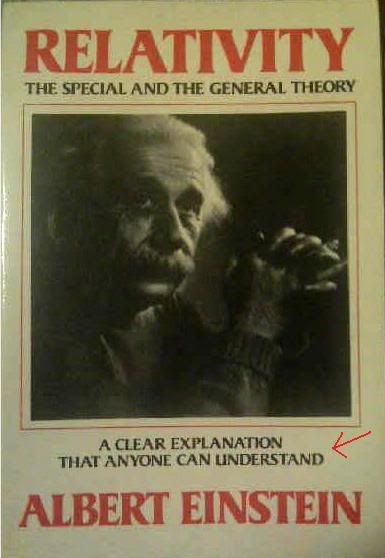
     I recommend this book to everyone. It’s not as easily understood as it claims, but it’s not as big of a trick as Einstein’s Relativity. The Selfish Gene isn’t capable of anything less than benefiting the human mind, no matter the amount of The Selfish Gene's detailed information it absorbs.
     Science made easy by metaphors; Dawkins finest quality as a writer. It’s easy to see after reading The Selfish Gene why it’s widely considered his “crown jewel,” but my favorite remains The Greatest Show on Earth. If I could have a love affair with a published work, The Greatest Show on Earth would be my dirty little secret.


This Week's Book: The Selfish Gene: 30th Anniversary Edition by Richard Dawkins

Chapter 3: Immortal coils
     It is its potential immortality that makes a gene a good candidate as a basic unit of natural selection. But now the time has come to stress the word ‘potential’. A gene can live for a million years, but many new genes do not even make it past their first generation. The few new ones that succeed do so partly because they are lucky, but mainly because they have what it takes, and that means they are good at making survival machines. . . . Conversely, what are the properties that instantly mark a gene out as a ‘bad’, short-lived one? There might be several such universal properties, but there is one that is particularly relevant to this book: at the gene level, altruism must be bad and selfishness good. This follows inexorably from our definitions of altruism and selfishness. Genes are competing directly with their alleles for survival, since their alleles in the gene pool are rivals for their slot on the chromosomes of future generations. Any gene that behaves in such a way as to increase its own survival chances in the gene pool at the expense of its alleles will, by definition, tautologously, tend to survive. The gene is the basic unit of selfishness. (Page 36)
—————

Chapter 3: Immortal coils
     As an aside, one of the good features of this theory is that it leads us to some rather interesting speculations. For instance it follows from it that if we wanted to increase the human life span, there are two general ways in which we could do it. Firstly, we could ban reproduction before a certain age, say forty. After some centuries of this the minimum age limit would be raised to fifty, and so on. It is conceivable that human longevity could be pushed up to several centuries by this means. I cannot imagine that anyone would seriously want to institute such a policy.
     Secondly we could try to ‘fool’ genes into thinking that the body they are sitting in is younger than it really is. In practice this would mean identify changes in the internal chemical environment of a body that take place during ageing. Any of these could be the ‘cues’ that ‘turn on’ late-acting lethal genes. . . . (Page 41)
—————

Chapter 10: You scratch my back, Ill ride on yours
     A long memory and a capacity for individual recognition are well developed in man. We might therefore expect reciprocal altruism to have played an important part in human evolution. Trivers goes so far as to suggest that many of our psychological characteristics—envy, guilt, gratitude, sympathy etc.—have been shaped by natural selection for improved ability to cheat, to detect cheats, and to avoid being thought to be a cheat. Of particular interest are ‘subtle cheats’ who appear to be reciprocating, but who consistently pay back slightly less than they receive. It is even possible that man’s swollen brain, and his predisposition to reason mathematically, evolved as a mechanism of ever more devious cheating, and ever more penetrating detection of cheating in others. Money is a formal token of delayed reciprocal altruism. (Pages 187-188)

Books read this past week...
★★★★★ Alice's Adventures in Wonderland/Through the Looking-Glass by Lewis Carroll
★★★★★ The Selfish Gene: 30th Anniversary Edition by Richard Dawkins
(All title links link back to my webpages of them on Goodreads.com, a great library/reviewing/rating website for readers. Check it out, and add me as a friend if you decide to join!)